02 · Local business discovery and reviews
Vibe
Tehran had plenty of opinions about local businesses and no dependable place to check them.
I shaped Vibe's roadmap, designed every customer and business flow, built the frontend from zero, and worked with the team on the trust and moderation systems needed before launch.
Why this product exists
Context
People in Tehran lacked a regional source of truth for local businesses and often relied on influencers or scattered social content. Businesses, especially restaurants, cafes, and services, had no durable place where real customer value could compound into reputation.
Product problem
A review marketplace has a cold start and a trust problem at the same time. Vibe needed a useful customer loop, a reason for businesses to participate, and moderation operations that did not silence genuine criticism or sell credibility to paying accounts.
Who it serves
Consumers seeking better local value; business owners building reputation; moderators, support, and administrators protecting the system.
What good looked like
More credible reviews. Each useful review improves discovery, gives the business actionable feedback, and makes the next customer's decision easier.
What made it difficult
Cold start
No reviews means no discovery value; no audience means little reason for businesses to ask for reviews.
Trust without coercion
KYC could add evidence, but forcing it would damage participation and exclude legitimate reviewers.
Fairness in both directions
Users need protection from pressure; businesses need a structured route to challenge fabrication and conflicts of interest.
Small team
The roadmap had to sequence customer value, business tools, moderation, admin, and monetization without building every layer at once.
What I built first, and why
- 1Live
Core value
Business profiles, reviews, discovery, and a fast scan of core information, rating, and review summary.
- 2Shipped
Trust and safety
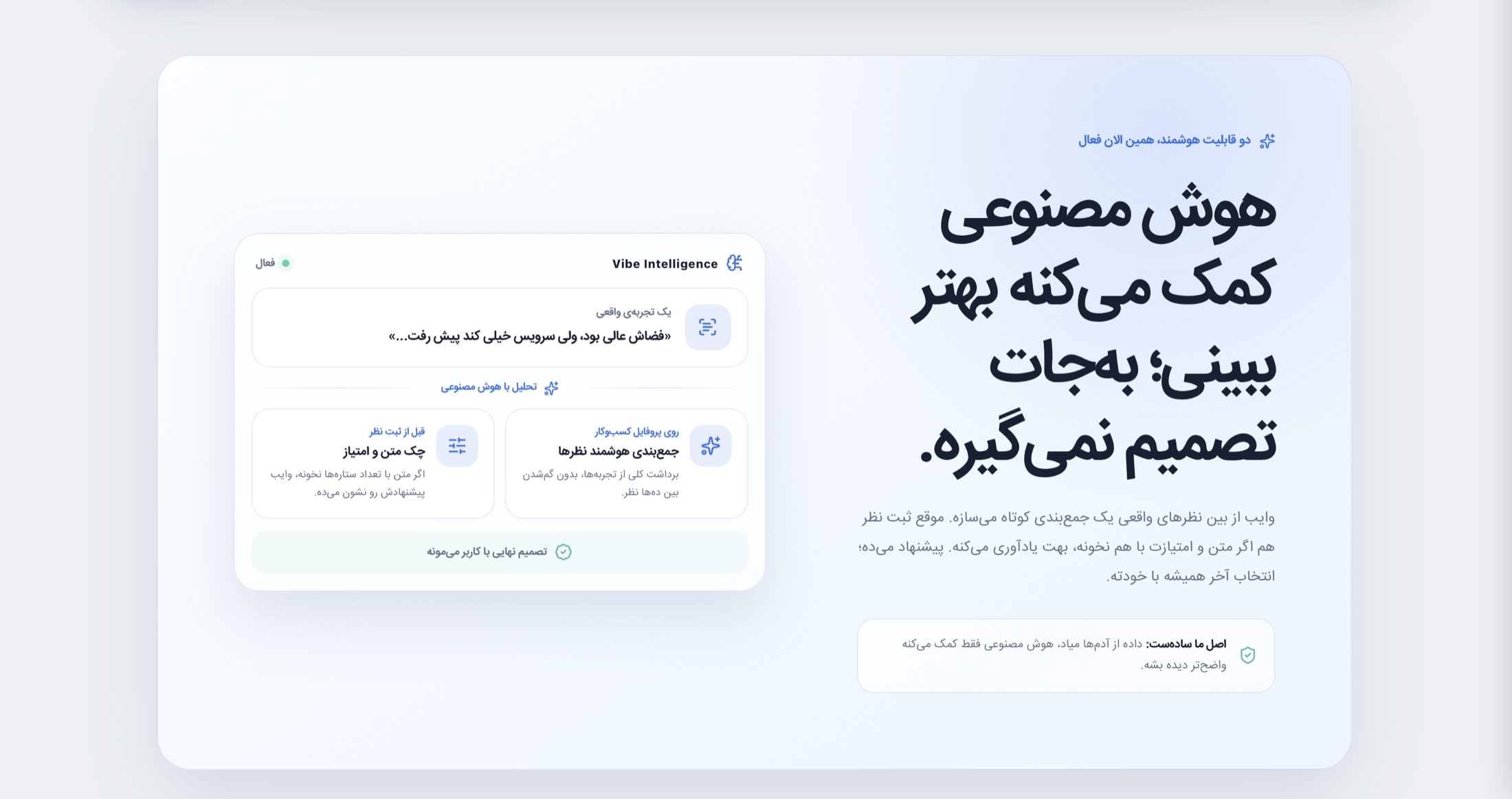
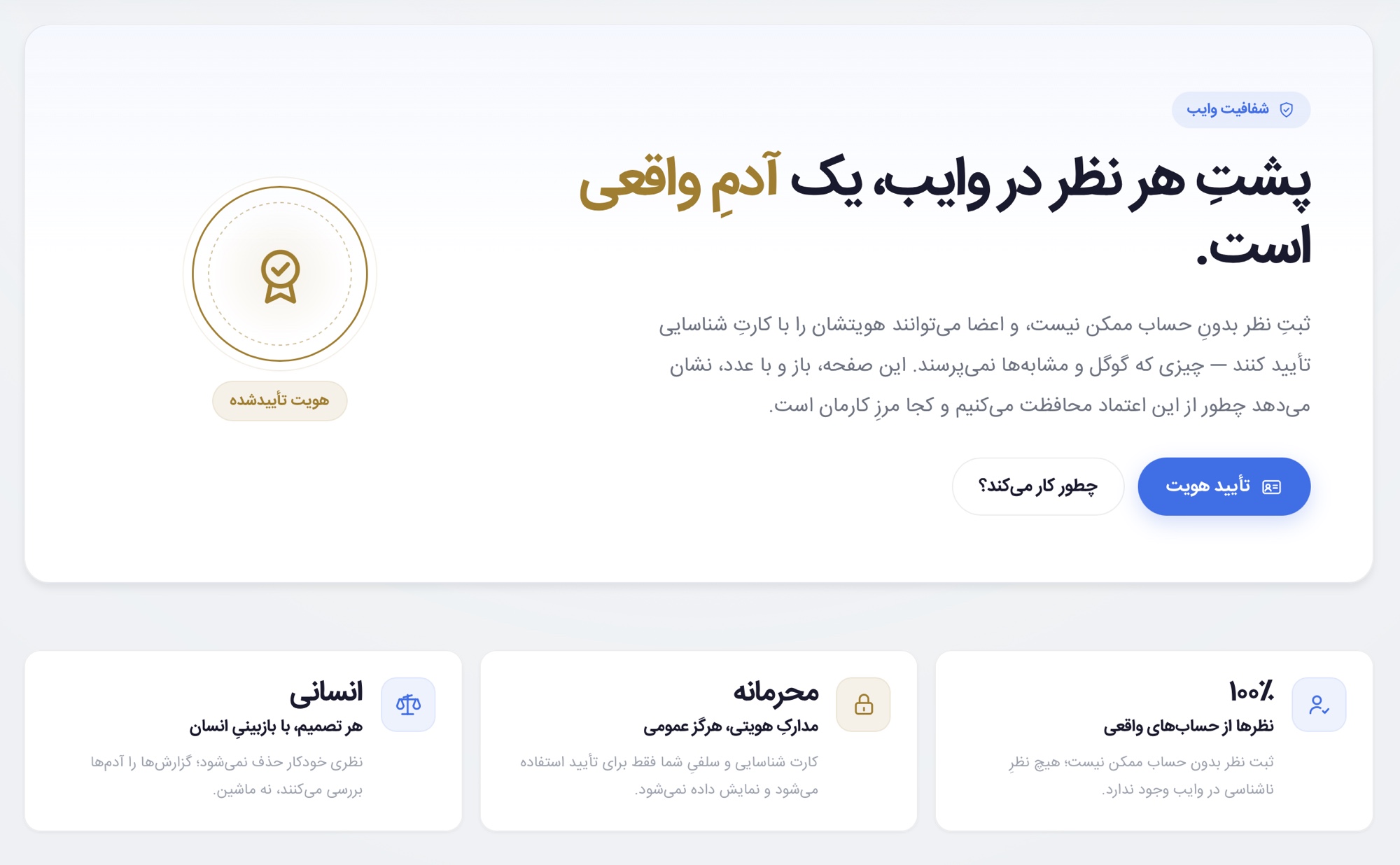
Optional KYC, KYB, reviewer history, AI-assisted rating checks, reporting, anti-fraud signals, and human moderation.
- 3Shipped
Operations
Admin queues, support, claims, evidence access, audit trails, risk states, and launch-day metrics.
- 4Designed / specified
Monetization
Business packages came last, after the team could define what businesses valued without making trust purchasable.
The calls I had to make
Sequence the roadmap by dependency
I sequenced the product from the core review loop outward: trust, operations, growth, then monetization. This kept dependencies visible and reduced premature feature work.
Keep AI rating changes optional
If review tone and stars differ by more than one, Vibe explains a suggested rating. The original rating never changes without explicit consent.
Keep identity verification optional
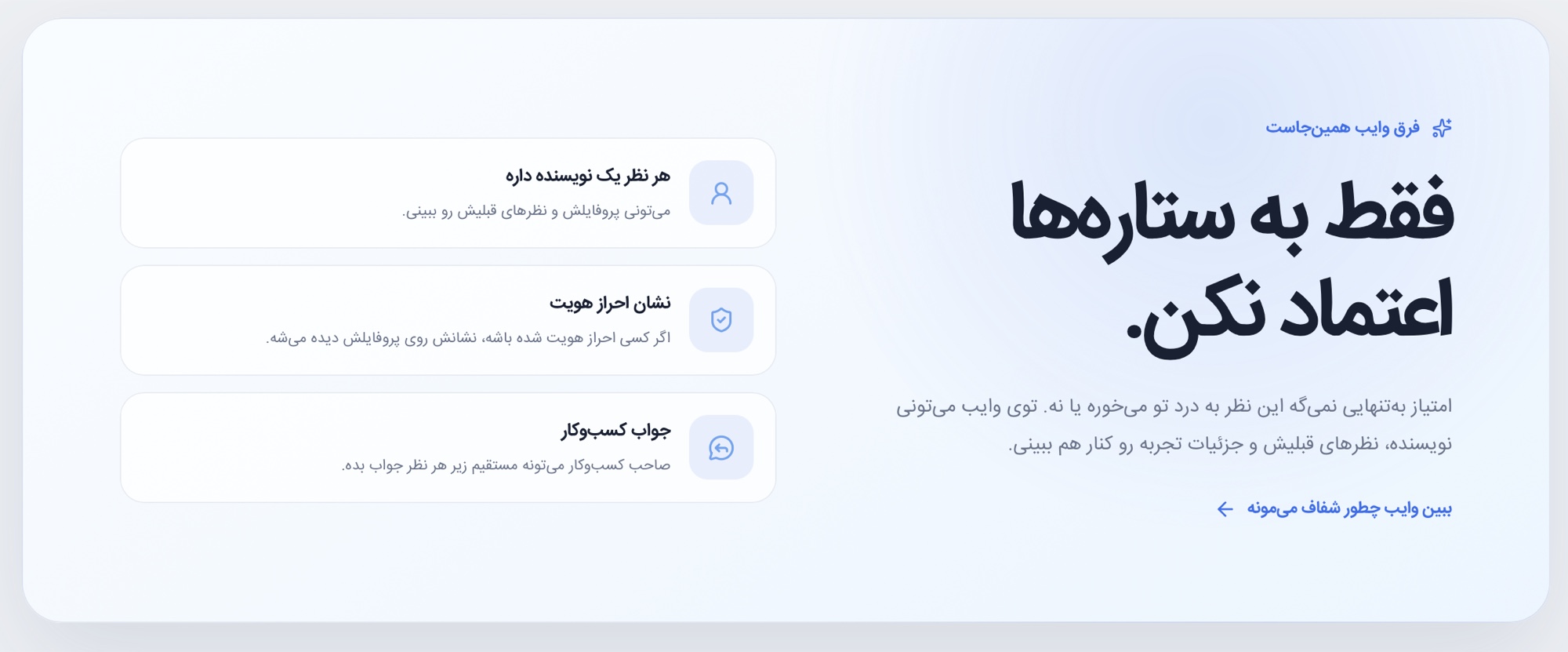
KYC is optional and clearly explained. Credibility also considers contribution history and suspicious patterns so privacy is not the price of being heard.
Define a fair moderation process
The fairness constitution protects genuine reviews, lets businesses challenge fabrication with private evidence, keeps paid tiers away from moderation outcomes, and provides an appeal path.
How the system works
Experience
Responsive RTL customer and business experiences built from zero in React and TypeScript.
Contracts
API handoffs define data, states, fallbacks, permissions, and acceptance conditions before backend implementation.
Quality
Requirements are traced through manual, visual, and scripted QA, triaged from P0 to P2, fixed, and retested.
Moderation
A single case model connects reports, evidence, human decisions, enforcement, appeals, and closure.
Readiness
The admin surface is prepared to track conversion and operational metrics from day one of public launch.
What I personally owned
- Core concept, customer problem, product strategy, layered roadmap, and prioritization
- All customer and business UX/UI, RTL design system, and senior frontend delivery from zero
- Cross-functional sequencing and specifications for frontend, backend, admin, and operations
- AI review quality, KYC/KYB, claims, moderation, support, packages, and trust architecture
- QA strategy, P0-P2 triage, release audits, and pre-launch readiness
What you can inspect
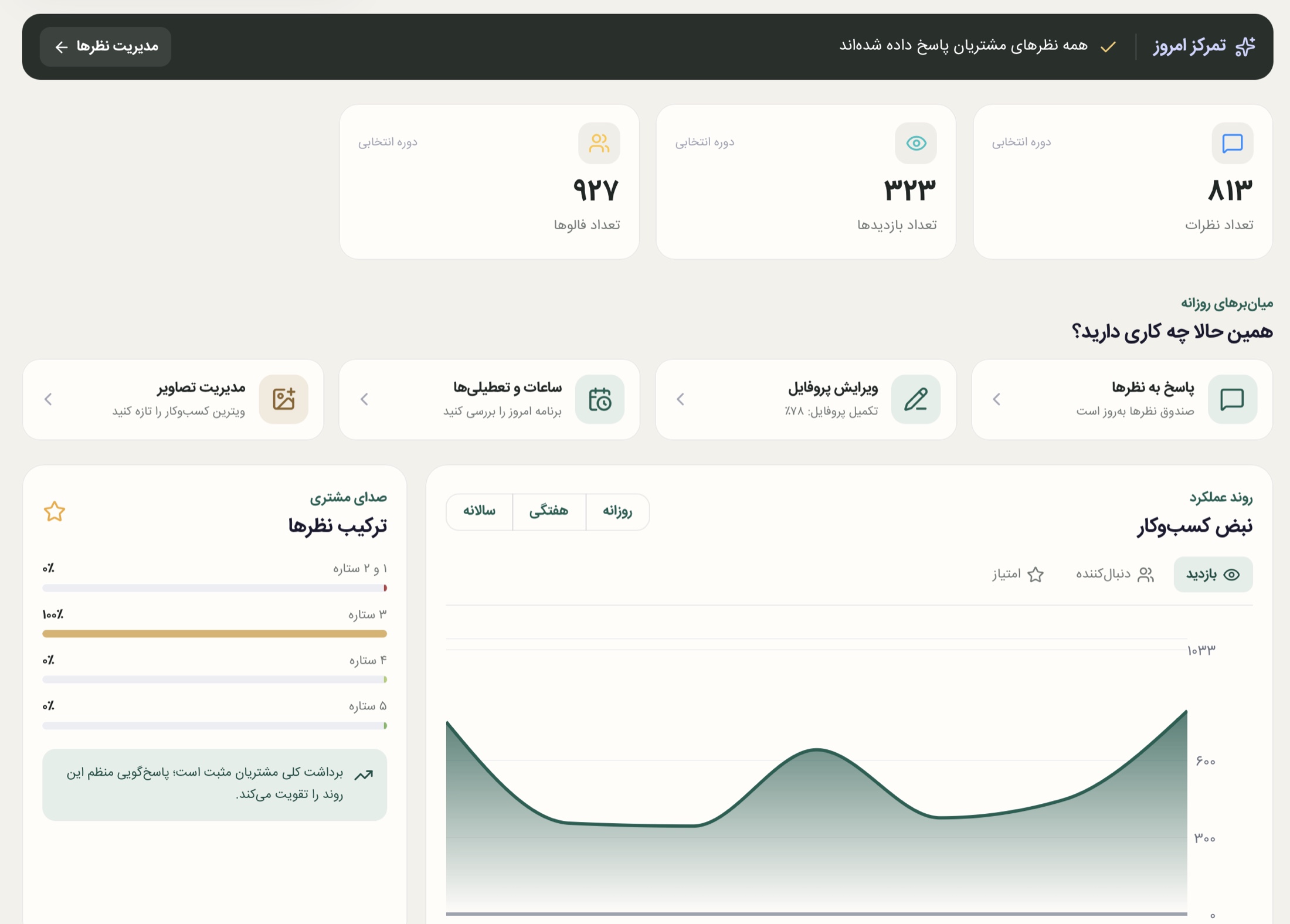
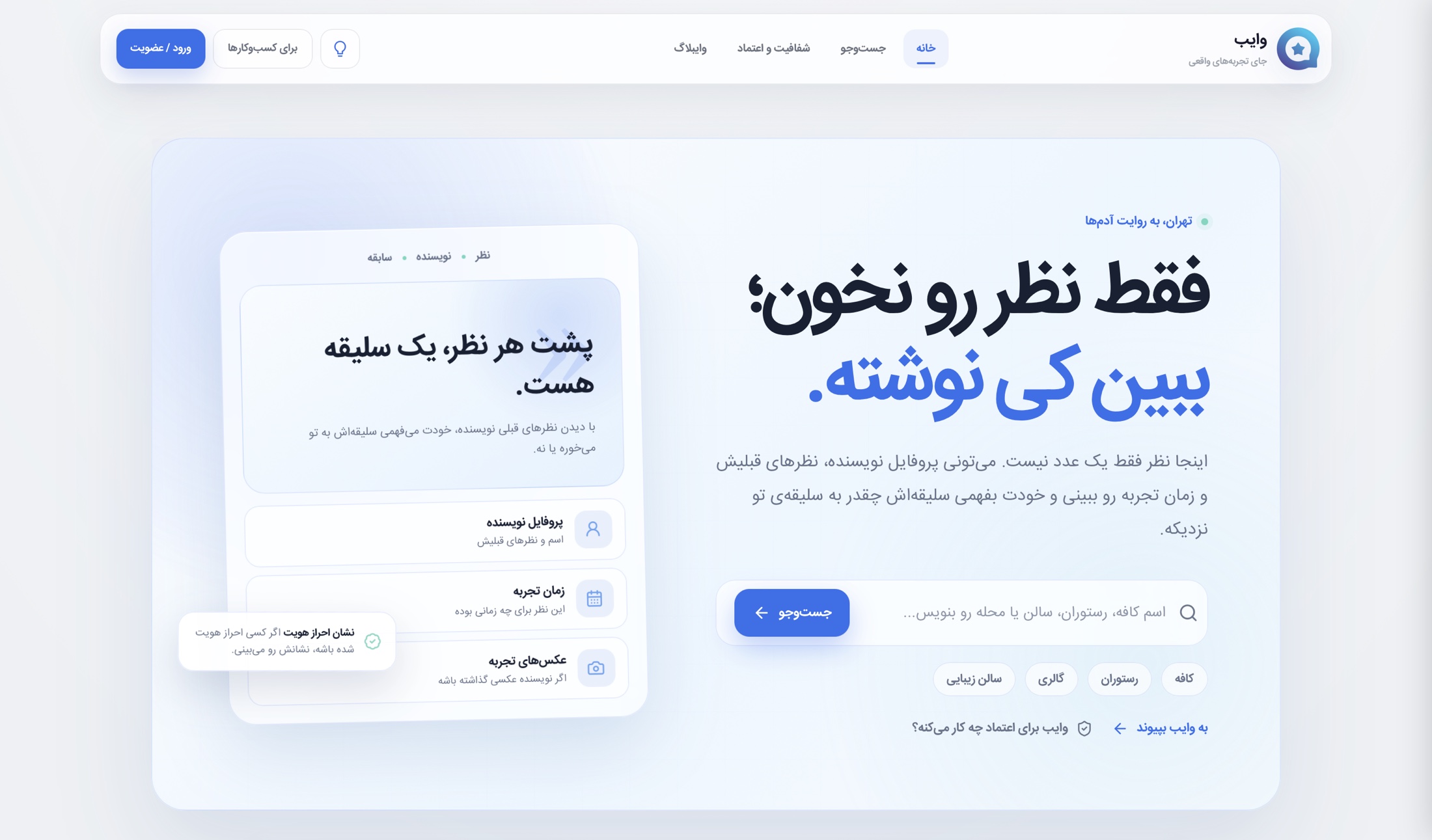
Customer, business, and admin surfaces
The repository and screenshots show working profiles, discovery, reviews, identity flows, business tools, admin reporting, and moderation interfaces.
Documentation from planning through QA
Jira planning, Git history, backend handoffs, QA tracking, and acceptance criteria connect the idea to implementation and retesting.
Fairness and moderation documentation
The product includes a written fairness constitution, credibility model, moderation lifecycle, and explicit boundaries between current and proposed systems.
Inside the product

Where it stands today
Vibe has a substantial pre-launch foundation across product, design, frontend, backend handoffs, QA, and operations. The work proves launch readiness and product judgment, not public-market traction that has not happened yet.
What I learned
- 01
Trust cannot be delegated to one badge, one score, or one identity check.
- 02
A two-sided marketplace needs operational design as early as interface design.
- 03
Monetization becomes clearer after the free core has proven what people value.